For generations, the dream of building a bespoke home in the UK has followed a familiar narrative. You find a plot of land, hire an architect, engage a local contractor, and prepare yourself for a year or more of muddy boots, fluctuating material costs, and the inevitable British weather delays.
But the housing market is evolving. Rising material inflation, acute trade labour shortages, and a push toward net-zero living have forced a major rethink in how we construct our living spaces. Enter the modern modular home.
If you are weighing up your options, you have likely asked yourself: how much does it cost to build a modular house, and does the reality of the final bill actually match the initial budget?
When we look beyond the raw numbers, the true financial story of a modular house cost lies in structural predictability, time management, and lifetime operational efficiency. Here is how off-site modular manufacturing stands up against traditional brick-and-mortar building in the UK.
The Myth of the "Cheap" Alternative
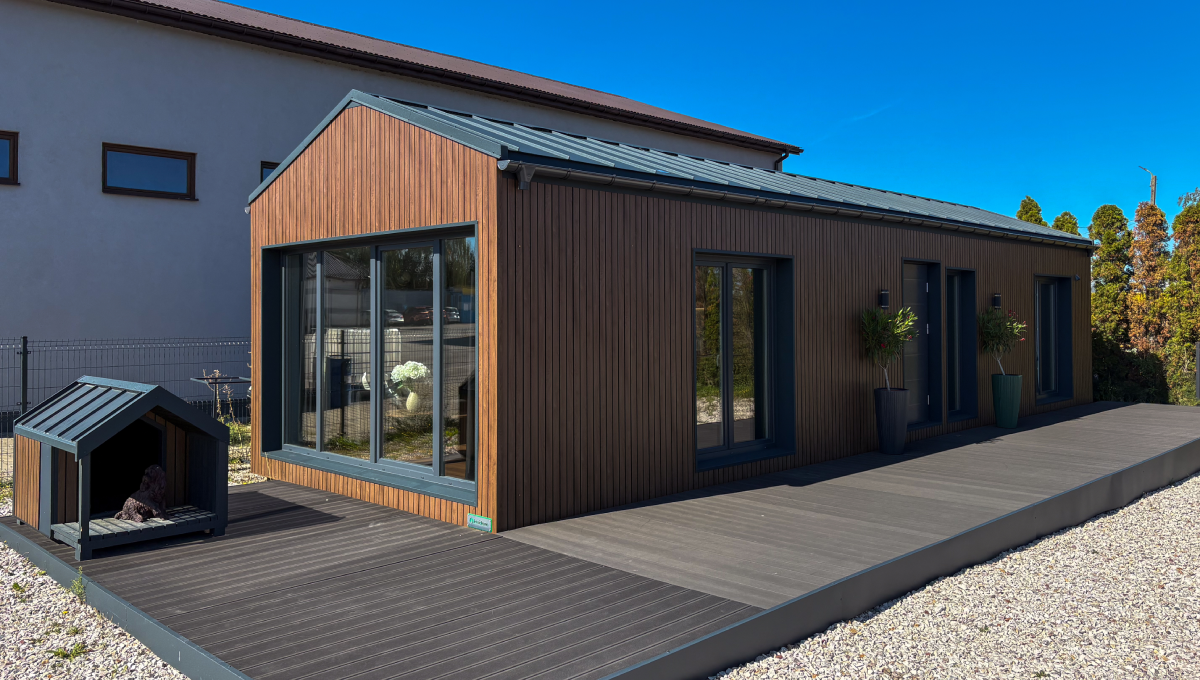
Let’s dispel the biggest misconception first: modular homes are not simply a low-cost, low-quality alternative to traditional housing. The era of the draughty, temporary post-war prefab is long gone. Today’s modular builds are precision-engineered, architect-led, permanent structures.
When analyzing modular house cost dynamics, buyers often expect a massive discount on the upfront ticket price compared to a traditional builder's quote. In reality, the initial base cost of materials and factory manufacturing can sit relatively close to conventional building estimates.
The real financial divergence happens when you look at cost certainty. A factory environment operates on a fixed-price model. The timber, steel, insulation, and internal fixtures are purchased at scale, indoors, months in advance. When you sign off on a modular design, that figure is locked in. Traditional builds, by contrast, are notoriously susceptible to on-site "price creep", where unpredictable ground conditions, sudden supply chain spikes, or subcontractor availability can silently erode a contingency fund before the roof is even on.
Speed as a Financial Asset
In property development, time is quite literally money. This is where the structural cost-effectiveness of modular homes becomes glaringly obvious. Because site preparation (digging foundations and laying utility connections) happens at the exact same time your home is being built inside a controlled factory environment, the total project timeline is routinely cut by up to 50%.
How does this affect your real-world budget?
- Reduced Financing Costs: If you are utilizing a self-build mortgage or a short-term bridging loan, cutting six to eight months off your build time dramatically reduces the interest you pay before transitioning to a standard mortgage rate.
- Dual Living Expenses: For every month your new home is under construction, you are likely paying either a rent payment elsewhere or a mortgage on your current property. Shorter timelines mean saving thousands on secondary living arrangements.
Eradicating the "Weather Tax" and Waste
If you have ever managed a traditional extension or build in the UK, you know that a wet November or a freezing January can stall a project for weeks. Bricklayers cannot lay mortar in freezing conditions, while exposed timber can warp in persistent rain. During these delays, you are still paying for rented scaffolding, site security, and plant hire.
Modular construction is entirely immune to the British weather. The modules are constructed to millimeter precision inside a climate-controlled facility.
Furthermore, traditional construction sites routinely see up to 30% of their materials end up in a skips due to ordering errors, weather damage, or off-cut waste - a hidden fee absorbed directly by the homeowner. Factories operate on strict circular economy principles. Materials are optimized via digital cutting plans, driving waste down below 5%. You pay for the material inside your walls, not the material in a disposal skip.
The Hidden "Reality Check" Costs
While the house itself offers unparalleled price predictability, buyers must remember that site-specific variables remain outside the factory doors. Your total budget reality will always include:
- Local Planning & Building Control Fees: Standard across all build types.
- Civil Engineering & Groundworks: Demolition, retaining walls, or challenging soil types.
- Utility Infrastructure: Connecting water, electricity, and sewage from the main road to your plot.
- Specialist Delivery Logistics: Ensuring the narrow country lanes or urban streets leading to your plot can accommodate the transport cranes.
The Long-Term Equation: Running Costs
The cost-effectiveness of a modular home does not stop the day you turn the key. Because modules are built using advanced manufacturing machinery, the structural airtightness and thermal bridging values are incredibly tight - far tighter than what can typically be achieved by hand on a windy, muddy building site.
Modern modular homes are designed around fabric-first principles. They feature high-performance insulation, integrated heat recovery ventilation (MVHR), and double or triple glazing as standard configuration.
In an era of volatile UK energy prices, the reality of living in a home that requires significantly less energy to heat or cool alters the true cost of ownership. When comparing a modern modular home against an older traditional brick property, or even a standard volume-built new build, the monthly utility savings offer a sustained return on your initial investment year after year.
Practical Structural Advantages
| Cost Driver | Traditional On-Site Build | Off-Site Modular Build |
| Price Predictability | Variable; vulnerable to material inflation and trade variations. | High; fixed factory contracts locked in at sign-off. |
| Labour Efficiencies | High risk from local trade shortages and day-rate inflation. | Minimal risk; structured factory shifts with steady output. |
| Timeline Reliability | High risk of weather delays and sequential scheduling friction. | Predictable; parallel scheduling unaffected by external climate. |
| Thermal Integrity | Dependent on variable on-site installation quality. | Factory-tested precision ensures highly airtight performance. |
When calculating how much does it cost to build a modular house, looking solely at the price per square meter misses the bigger financial picture. The true value proposition is found in the elimination of risk. By trading unpredictable site variables for precision factory manufacturing, you ensure that your paper budget translates cleanly into your real-world home.